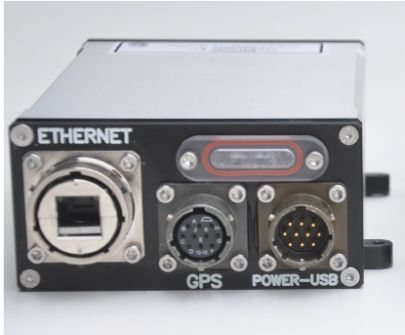
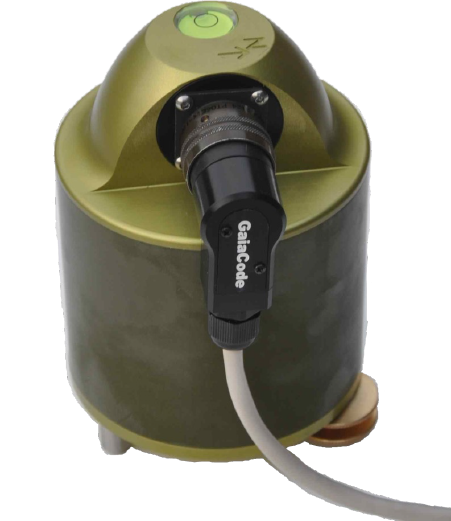
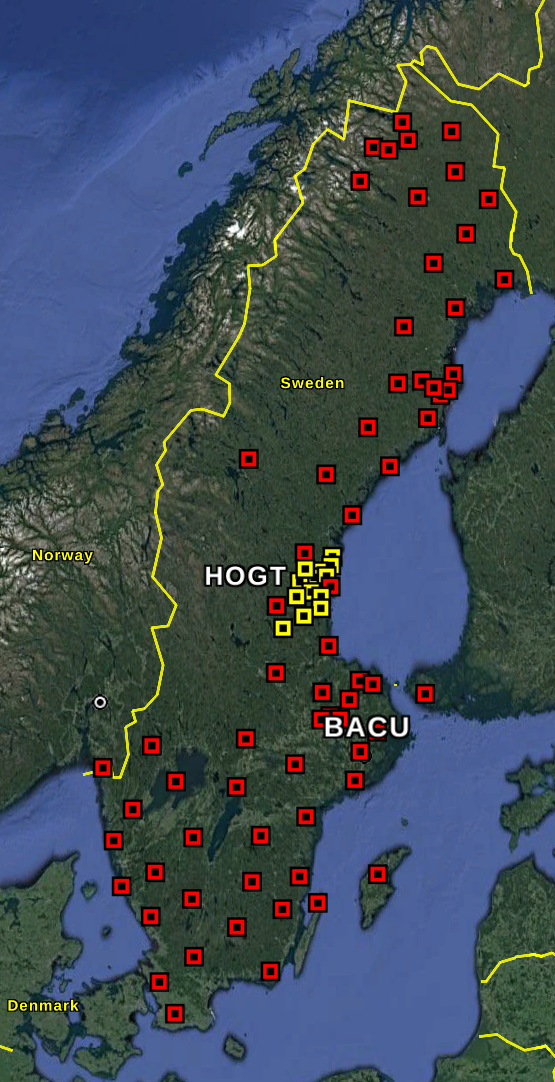
GaiaCode equipment is being used in the long planned modernization of the Swedish National Seismic Network (SNSN). Operated by the Department of Earth Sciences at Uppsala University this network consists of 67 seismic broadband stations distributed all over the Nordic country. They are transmitting their data continuously in real-time to the SNSN centre. This permanent network is augmented by a temporary deployment of additional 13 stations in Eastern Sweden. The purpose of this dense temporary network is to monitor local seismicity and to delineate subsurface structures. On the map below the permanent stations are shown as red squares, the temporary stations appear in yellow.
Many of the Swedish stations have been operational for more than 20 years, and a gradual modernization of the network is necessary. After some intensive comparative instrument testing the Swedish network operators chose GaiaCode to provide equipment for the upgrade of seven of their network stations. Their seismic instrument combination of choice was the ALPHA LIGHT broadband seismometer combined with our TAU digitizer.
ALPHA Lights were chosen for a variety of reasons, one of them being their flat response over a wide spectral range with a high frequency corner at 150 Hz. In addition, the instruments delivered were set to the unusual high sensitivity of 10,000 V/(m/sec). This value is one of the important network requirements, because the noise at most station location is very low and the network is meant to measure very small microseismic events. The TAU digitizers/data loggers also fit directly into the current network data structure based on the Seedlink protocol without requiring any changes.
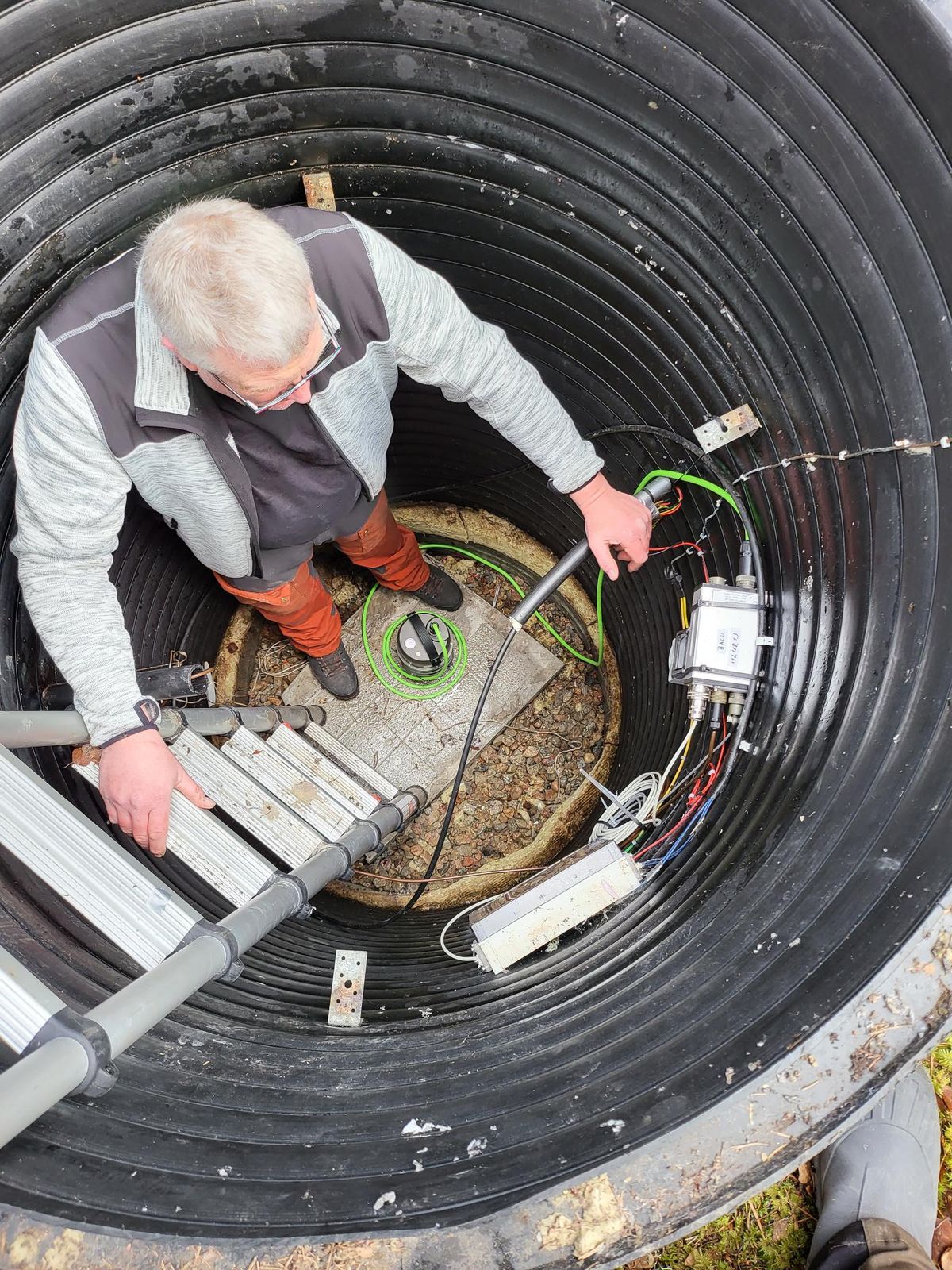
Each SNSN station is deployed in a 1.5–3 m deep cylindrical vault, with the sensor placed on a concrete pier cast directly on solid bedrock. Insulation is provided both by a styrofoam box covering the sensor, as well as by a sturdy styrofoam lid in the upper part of the vault. This minimizes temperature variations at the sensor and maintains a proper temperature range for electronic equipment. Currently the GaiaCode equipment is installed in two of the network stations (BACU and HOGT) with a data availability rate of 98.8 percent. The equipment for five more stations will be installed in the near future.