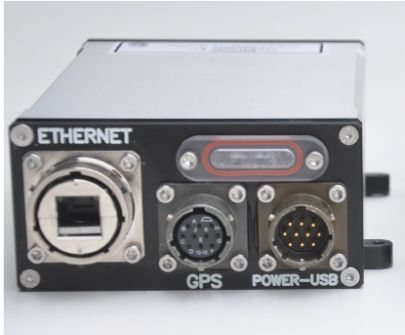
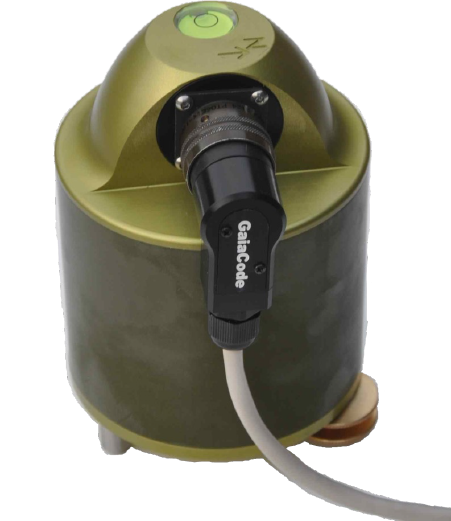
Under a contract with the National Disaster and Emergency Management Authority (AFAD) in Ankara Gaiacode has installed three seismic borehole stations in Turkey. These stations will augment an existing seismic monitoring network in the country, which has one of the highest earthquake hazards in the world. Each station consists of a downhole seismic instrument and a multichannel Tau digitizer at the wellhead. The downhole instruments contain a set of three Alpha broadband sensors, three Sigma accelerometer sensors and a newly designed single jaw hole-lock to anchor the instrument into the steel cased borehole. These sensor elements and the hole-lock are stacked in a 316 stainless steel tube with a diameter of 89 millimeters. The whole system is pressure rated to a water depth of 900 meters.
Three locations in Turkey
The boreholes are located in Istanbul, in the far eastern Anatolian city of Erzurum and in Kütahya in the western part of the country. The instruments are installed at borehole depths of approximately 110 meters each. Their data are being transmitted in analogue form to a Gaiacode Tau digitizer at the respective wellheads.

Wide bandwidth and high dynamic range
The combination of Alpha and Sigma sensors in one borehole unit allows for the recording of seismic signals over a wide frequency range, from 120 seconds to 100 Hertz for the broadband sensor and DC to 350 Hertz for the Sigma accelerometers. The Sigma accelerometers are set to record strong ground motion of up to 4 g.
In addition each borehole sensor stack also contains a temperature and a humidity sensor to monitor the environmental conditions inside the borehole. We also added a three axis MEMS accelerometer to measure the tilt of sensor stack. We use this measurement after the stack is locked in the borehole, but before the sensors are unlocked. If the tilt is too large due to deviations of the borehole from the vertical, the stack can be moved to a more suitable location up or down the borehole.
New Single-Jaw Holelock
The sensor stack is combined with a powerful single arm hole-lock, which locks the sensor system against the borehole casing with a force exceeding 30 kilograms. Together with the hole-lock two sets of “ears” (skids) at the top and bottom of the sensor stack force the sensor stack against the borehole casing. This geometry shifts possible parasitic resonances of the locked instrument package in the borehole far out of the seismic band. One of the main features of this unique hole-lock design is that the instrument package can be removed from the borehole without retracting the hole-lock arm.