GaiaCode has just finished drilling two boreholes for a unique multidisciplinary geophysical borehole observatory to Türkiye. Under contract with the German Geoscience Research Center (GFZ) in Potsdam the observatory is being constructed on the Kapidağ Peninsula on the southern coast of the Marmara Sea. It is being instrumented with a three component, low noise ultra-broadband ALPHA seismometer, a dilatometer, a strainmeter, a continuous pore pressure sensor and a downhole temperature probe. As an industry's first these instruments were all designed and built in house by GaiaCode. To complete the observatory, the sensors will be augmented by a MEMS accelerometer and a three axis 4.5 Hz geophone installed downhole as well as a weather station at wellhead. The latter instruments were supplied by other vendors but integrated into the observatory by us.
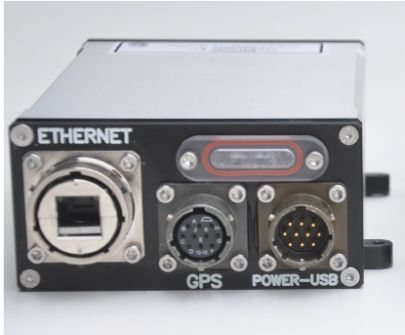
The analogue measurements from these instruments will all be transmitted to the respective well heads, where they will be processed by a fleet of TAU digitizers. GaiaCode's OMEGA software is used for recording and controlling-configuring the sensor system and the digitisers.
 Thumbs up after successfully drilling: Drillmaster Avni Karaca, Prof. Marco Bohnhoff (GFZ), Cansun Guralp (GaiaCode), Recai Kartal and Turgay Kuru (AFAD) and Digdem Acarel (Gebze University of Technology) in front of the drill rig. (Source GFZ)
Each of the boreholes is approximately 110 m deep with minimal vertical deviation. Currently the first set of instruments (dilatometer, strainmeter and a set of borehole geophones) is installed in the first borehole. They are cemented in place. The sensor measuring the pore pressure will be cemented into the second borehole.
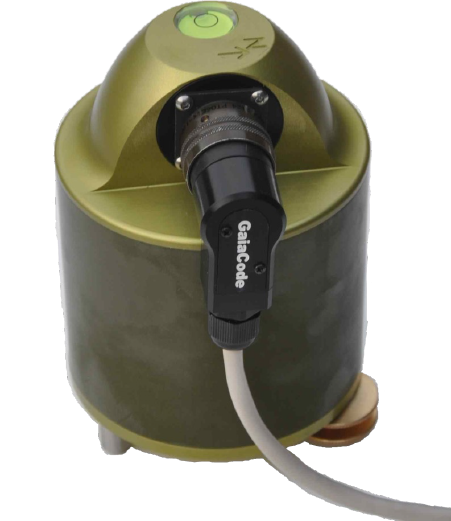
Except for the geophone, these new sensors were designed and built in house by GaiaCode's founder Cansun Guralp. With his fourty years of experience in developing geophysical instrumentation, he also designed the sensors of the ALPHA family of low noise, ultra broadband seismometers. The borehole version of this seismometer will be installed in special casing in the first borehole. It has a ultra broadband frequency characteristic with a flat response over five orders of magnitude of the seismic band. The seismometer will also serve as a downhole tiltmeter, using its mass position outputs. The broadband seismometer will not be set in cement but is equipped with a single jaw hole-lock for easy retrieval.
The new observatory is a major extension of the GONAF-Project, a joint research initiative by the GFZ and the Turkish Disaster and Emergency Management Presidency (AFAD). The acronym GONAF stands for “Geophysical Observatory at the North Anatolian Fault”. Its main objective is to measure tectonic deformation transients (seismic and aseismic) along the Marmara section of the North Anatolian Fault in northwestern Türkiye. This section is overdue for a major earthquake. Once installed, the observatory will be jointly operated by GFZ and AFAD.